Vincent Hinde Collection
Four Oaks Park Racecourse
Earliest meeting: Thursday 17th March 1881
Final meeting: Friday 23rd August 1889
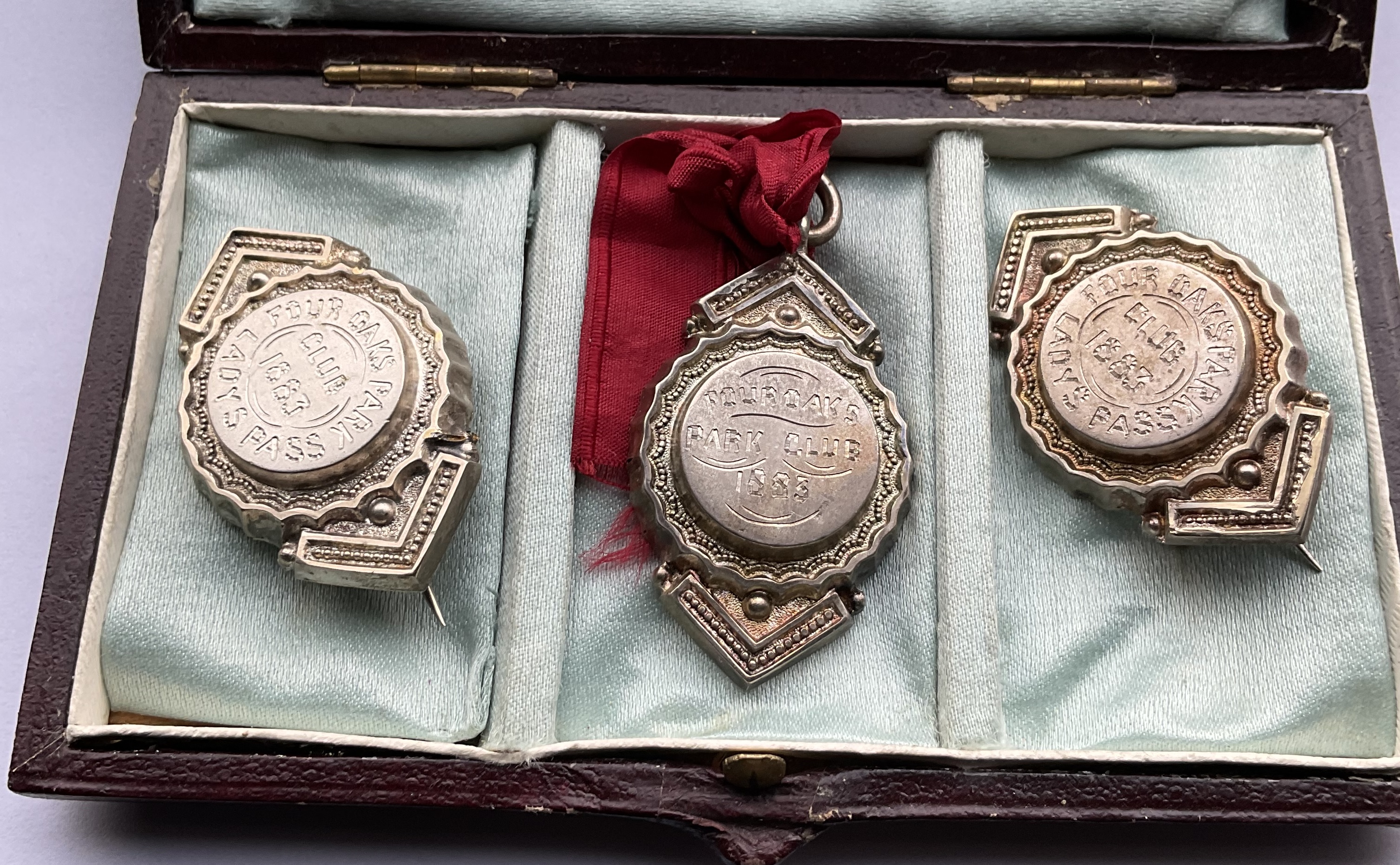
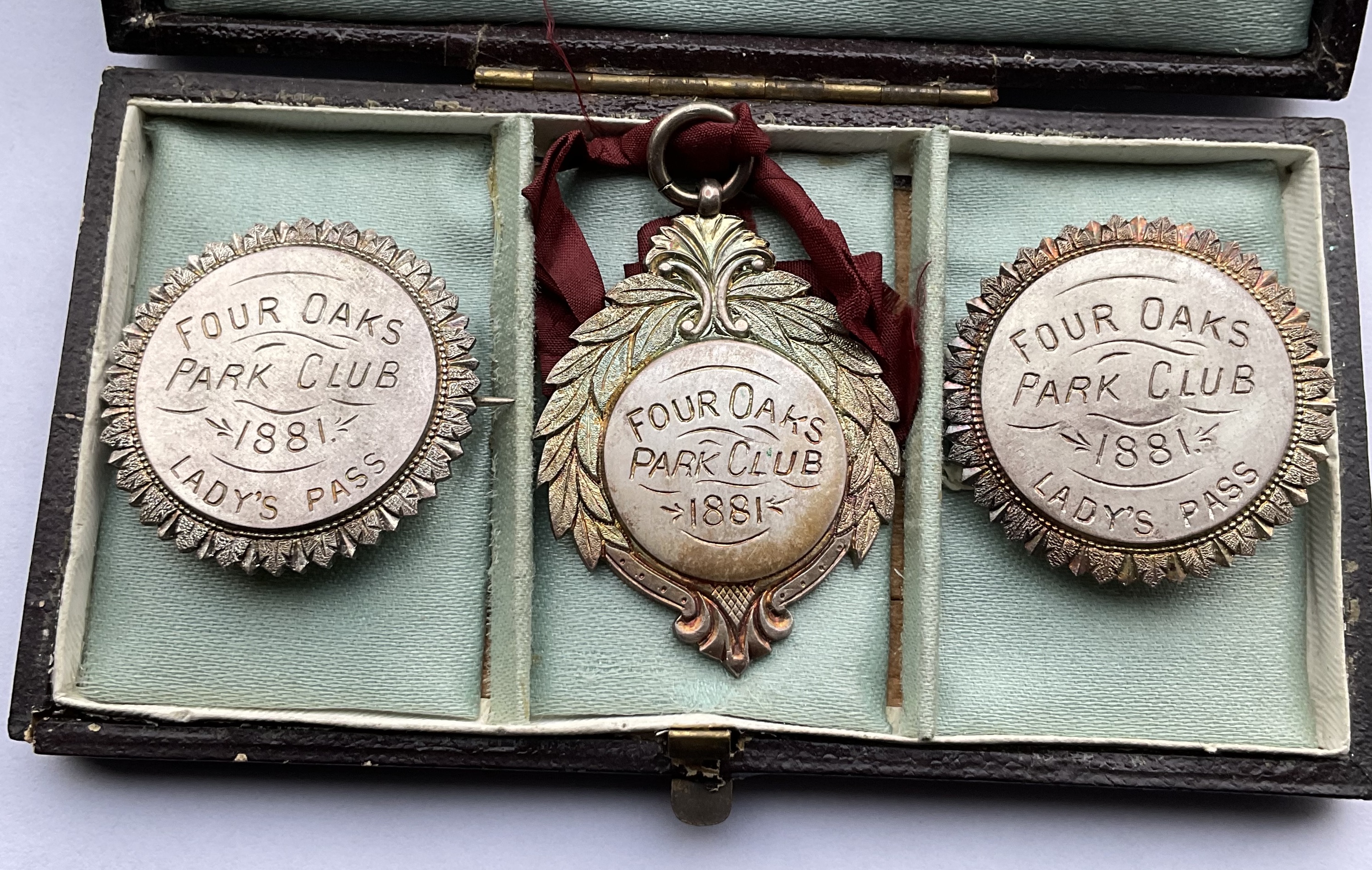
Today Four Oaks is a residential area of Sutton Coldfield on the northern and eastern borders of Sutton Park. However, back in the 17th century Henry Folliott bought 60 acres of woodland and built Four Oaks Hall. Two centuries later Sutton Park Racecourse, which had operated since the 1830s, closed its gates for the final time on Wednesday 20th August 1879 leaving a gap in the racing market and a desire for a new project by Clerk of the Course John Sheldon. His grand project was to purchase nearly 250 acres of nearby Four Oaks Park from Sir John Hartopp and create one of the finest racecourses in the country. It cost him £40,000, which is over £5 million in today’s money, to develop a 1½ mile course complete with five superb grandstands capable of entertaining up to 3000 people. Annual membership badges were sold and the first two day meeting took place on Thursday 17th and Friday 18th March 1881. Almost 20,000 people witnessed Pride of Prussia land the principal race, the Grand National Hunt Steeplechase, while Quibble won the Birmingham Grand Annual Chase. Four Oaks Park was unusual for its day in offering both Flat and National Hunt racing, and at the meeting on Tuesday 28th and Wednesday 29th June 1881 the brilliant jockey Fred Archer rode eight winners spread over the two days. The next year a problem arose at the track which the Stewards dealt with firmly but fairly. Mr Abington, real name George Alexander Baird, was a very wealthy young man who had inherited the wealth his father had amassed from the iron industry. He was a reckless jockey and on Tuesday 11th April 1882 rode Billy Banks to victory against Lord Harrington’s Gartmore, only to lose the race for not making the correct weight. Worse was to come because the good Lord reported him to the Stewards for making inappropriate remarks and they correctly decided to pass the incident on to the National Hunt Committee who warned Mr Abington off for two years. George Baird never really recovered from the incident and continued gambling and drinking heavily. He did later return to ride at Four Oaks in 1888, but he died at the young age of 31. Racing continued after the 1882 incident for a further 7 years, but the crowd sizes were insufficient to maintain such a magnificent racecourse, each year bringing new financial worries. The final two day meeting was held on Thursday 22nd and Friday 23rd August 1889, with a poor four runner affair won by The Carronald winding up proceedings. Almost exactly a year later, on 28th August 1890, Four Oaks Hall, land and racecourse were all sold at a loss and part of the land was used to buld the prestigious houses on the Four Oaks Hall Estate.